Plastic materials, such as food wrappers, plastic utensils, water bottles, and synthetic textiles, shed plastic particles smaller than 5mm (Bai et al., 2022) — commonly known as microplastics — that do not easily degrade (EFSA CONTAM Panel, 2016). These microplastics contaminate the water supply and agricultural soil, then enter plants and animals that are used as food sources (Lazar et al., 2024). Chandra and Walsh (2024) estimated that microplastics are found in up to 83% of tap water worldwide.
Today, the question appears not to be whether humans are consuming microplastics, but rather how much. Reports vary wildly, ranging from the alarming figure of 50 plastic bags a year (Bai et al., 2022) to the only slightly less worrying one credit card a week (Gruber et al., 2022), but there is little question that microplastics have already been found present in human bodies (Ragusa et al., 2021; Leslie et al., 2022; Jenner et al., 2022). The full health implications are currently unknown (World Health Organization, 2022).
About 60% of all fibers used in clothing are plastic-based (Parker et al., 2025), and such textiles shed up to 500,000 tons of microplastics into the ocean per year (European Environment Agency, 2022). Are there synthetic fabrics in the kitchen? In a sense, there might be more than you think.
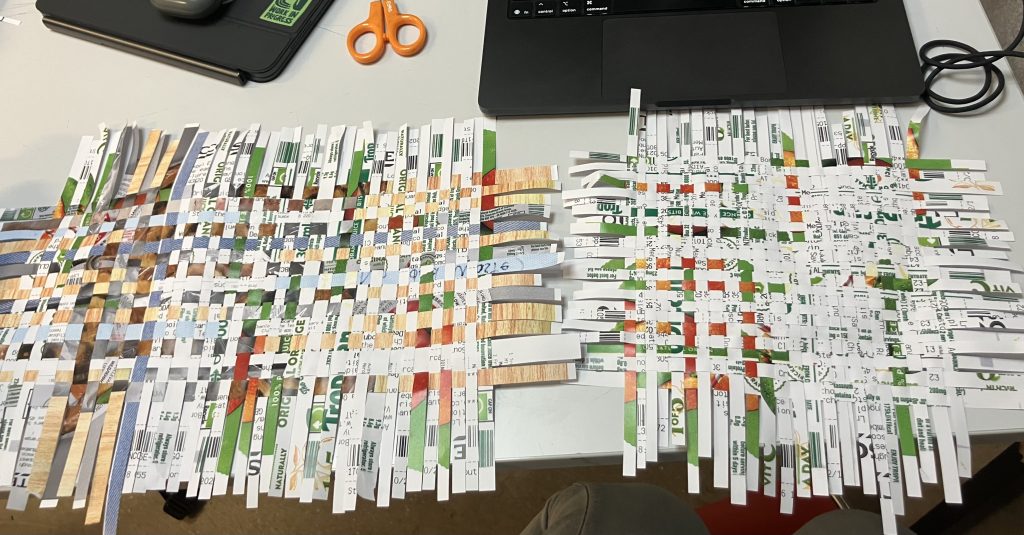
For this project, I collected scrap materials from around a household kitchen, such as food packaging, plastic wrappers, receipts, vinyl “wood” veneer, and fabric from clothing. I then scanned and copied these materials onto large sheets of paper, cut them down into thin strips, and hand-wove them into “textiles”. The result is a synthetic material in the literal sense of me artificially combining manmade elements into a whole, but it is also meant to emulate how synthetic fabrics are actually produced: by melting down plastics, extruding them into thin fibers, and knitting them together.
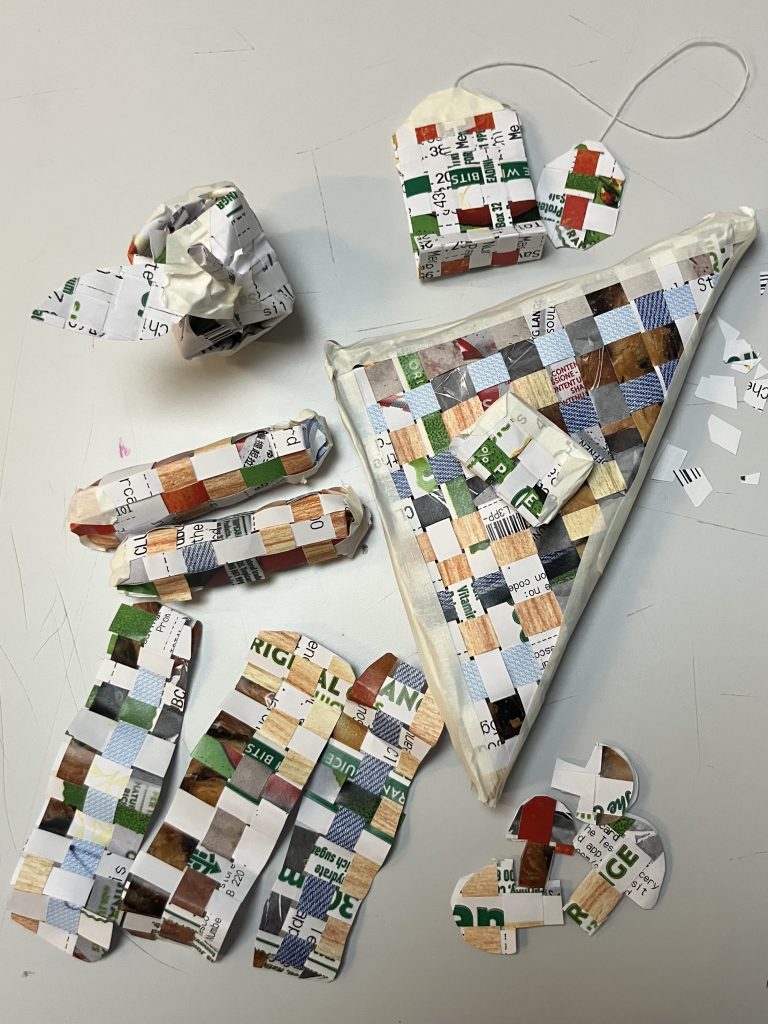
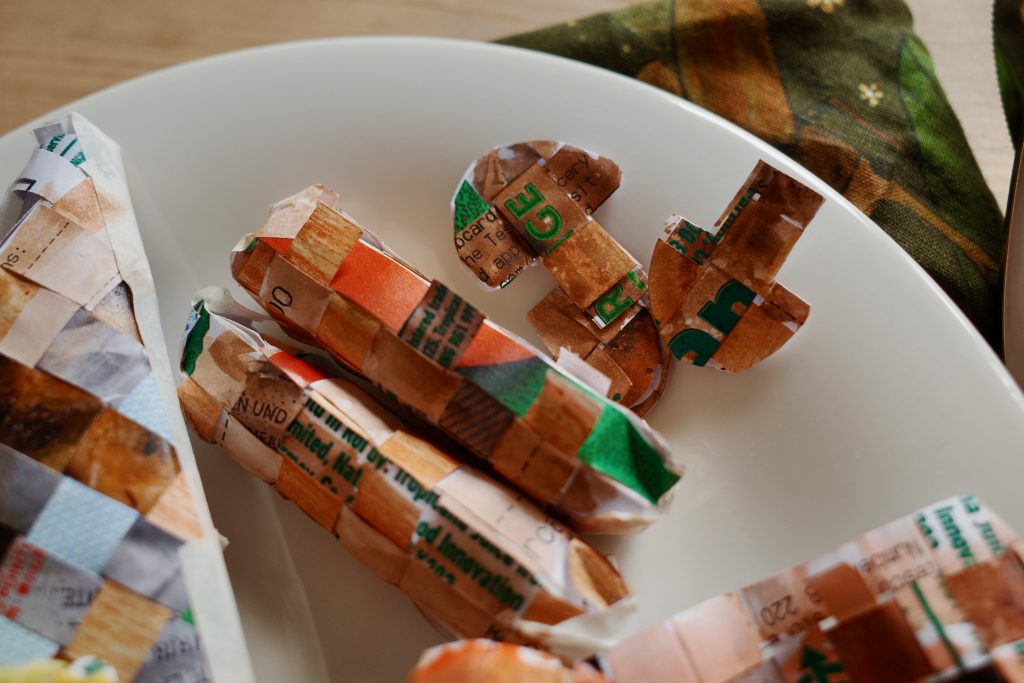
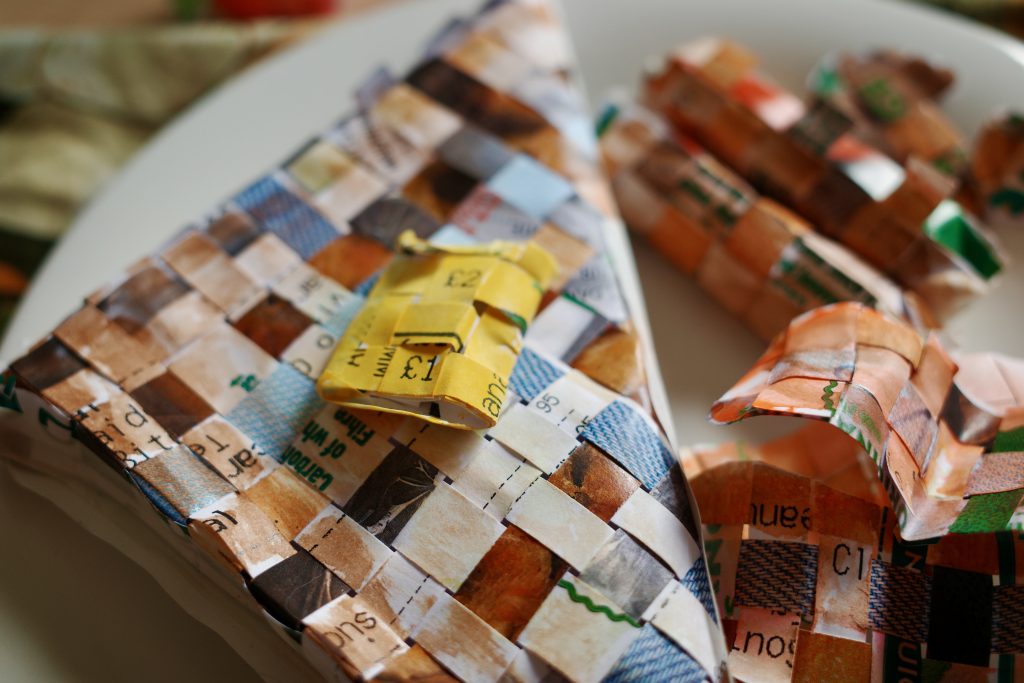
I used glue and masking tape to bind my “textiles”, then shaped, painted, and plated them like real food and drink. In a very literal way, the synthetic fabrics we make end up on our dinner plates. The cycle is complete.

Leave a Reply